Nature, Nurture & the GSP


Tipsy Rabbit Tips & Pointers Blog
How Much of Your Puppy’s Personality Is Genetics?
One of the most common thoughts puppy families have is some version of this: “What will my puppy be like when they grow up?”
Will they be confident? Cuddly? Independent? Easygoing? Birdy? Wildly energetic? A Velcro dog who follows you from room to room? And perhaps the bigger question behind all of those: How much of that personality is already there when a puppy is born?
The answer is both simple and complicated. Genetics matter. A lot. But genetics are not destiny.
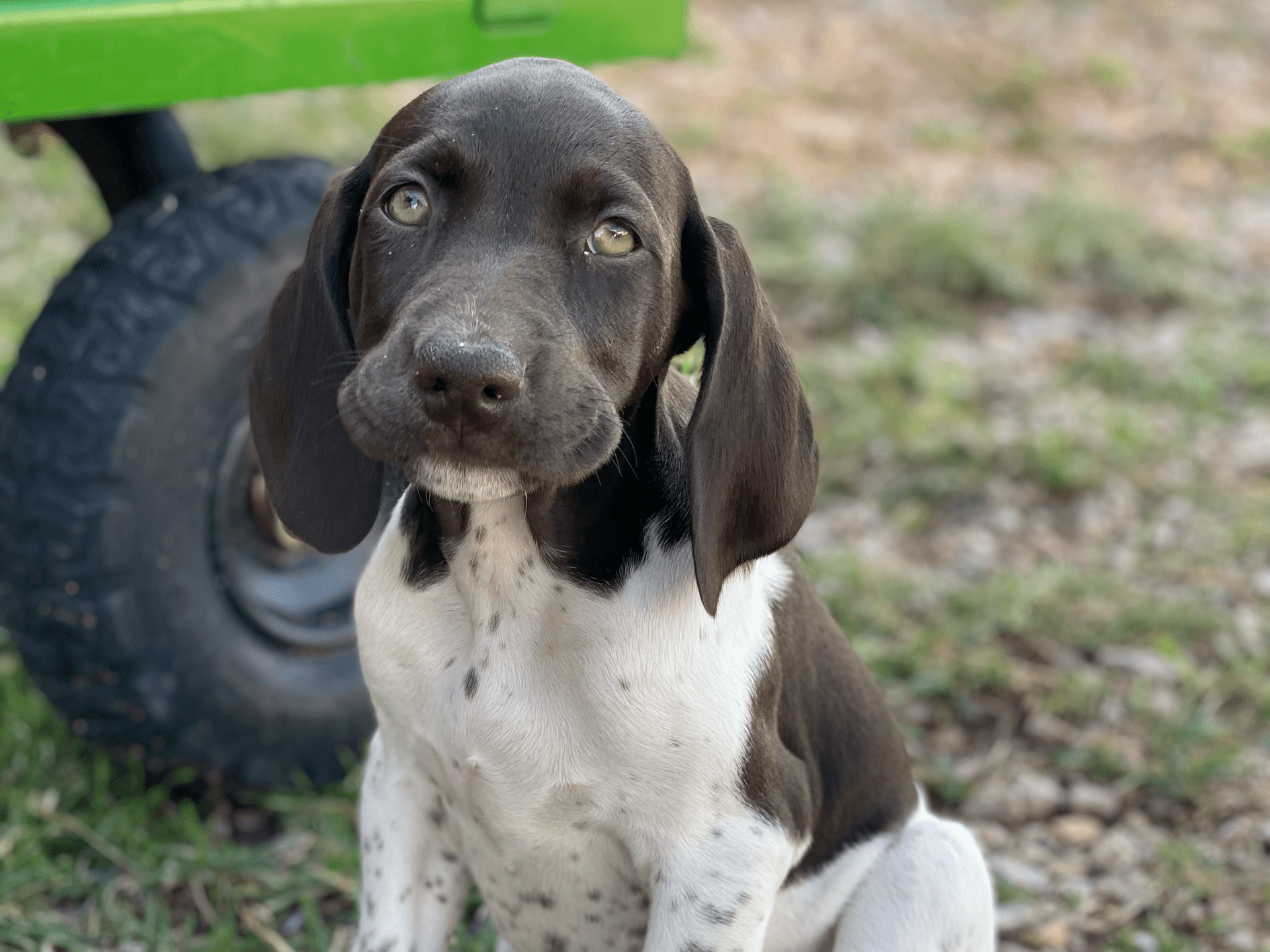
Every puppy comes into the world with a genetic blueprint inherited from generations of dogs before them. How that blueprint develops is influenced by everything that happens next—from those first weeks with the breeder to the home, structure, training, experiences, relationships and lifestyle that puppy grows up with. That interaction between nature and nurture is where the dog you eventually know and love begins to emerge.
What Genetics Can Give Us
When breeders talk about temperament, we're not simply talking about whether a dog is “nice.” Temperament encompasses a much broader collection of traits: confidence, resilience, sociability, sensitivity, energy level, prey drive, persistence, independence, biddability, environmental stability, frustration tolerance and even how readily a dog recovers after something unexpected.
Many of those traits have a genetic component. That is one reason knowing the dogs behind a pedigree matters.
A breeder who has lived with, trained, hunted over, competed with or closely followed multiple generations of dogs has information that can't be found simply by reading the names on a pedigree. We begin to recognize patterns.
Maybe a particular line consistently produces dogs with tremendous natural bird drive. Another may be known for biddability or an especially strong desire to work with its handler. Some families of dogs may mature slowly, while others seem to arrive in the world believing they are ten feet tall and bulletproof.
Those tendencies don't guarantee exactly what an individual puppy will become—but they give us valuable information about the range of traits we may expect.
Breed Matters, Too
Before we ever get down to the individual puppy, we also have to consider the breed itself.
German Shorthaired Pointers were developed as versatile working dogs. Generations of purposeful breeding selected for qualities such as athleticism, endurance, prey drive, intelligence, persistence and the ability to work cooperatively with a human handler. Those traits didn't disappear when GSPs started sleeping on our couches.
A puppy may never see a bird field and still inherit many of the characteristics that made their ancestors successful there. That intense focus on the squirrel outside the window? The determination to investigate every smell on a walk? The puppy who figures out exactly where you hid the tennis ball and refuses to abandon the search?
Some of the behaviors that make us laugh—or occasionally question our life choices—are expressions of traits humans deliberately selected for over generations. Understanding the breed helps us appreciate the dog in front of us rather than expecting them to behave like something they were never bred to be.
But Genetics Aren't the Whole Story
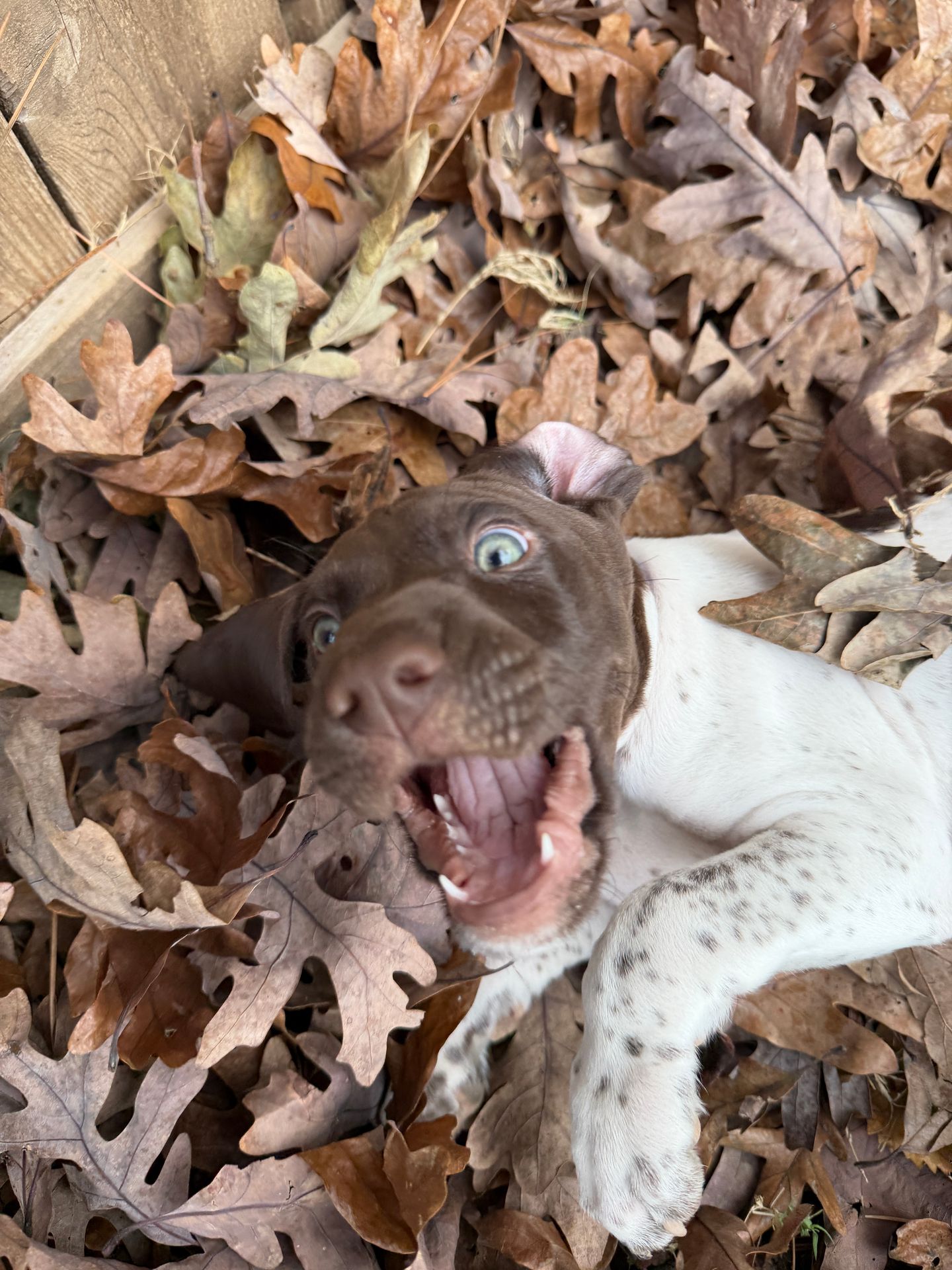
Two puppies from the same litter can share the same parents, spend their first eight weeks in exactly the same home and still grow into noticeably different adults. That's because every puppy receives a different combination of genes. And once those puppies leave the breeder, their worlds begin to look very different.
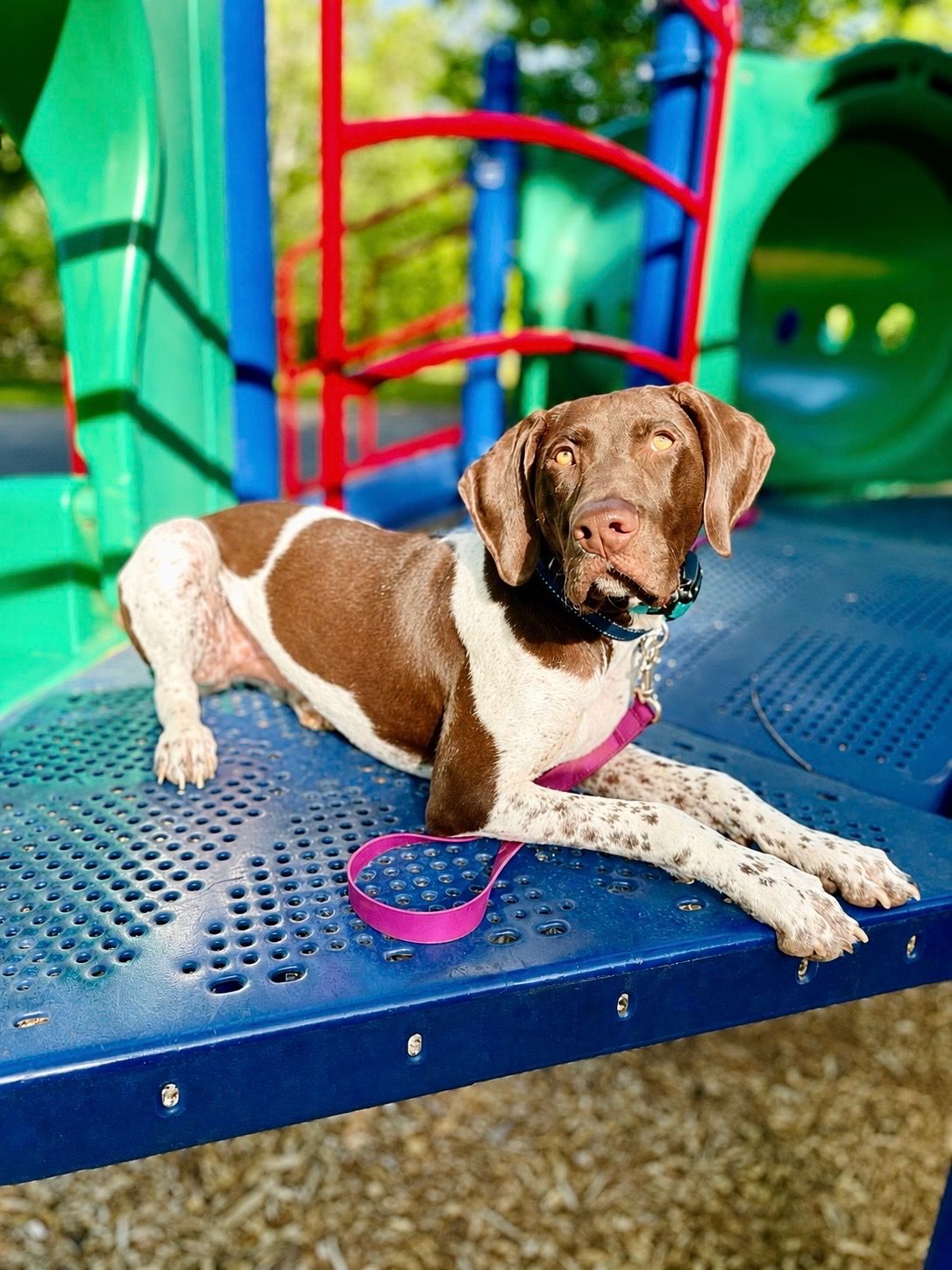
One may grow up in a busy household with children, visitors and multiple dogs. Another may live with a single owner in a quieter home. One may spend weekends hunting. Another may hike, run, dock dive or compete in dog sports. One family may provide tremendous structure and consistency while another gives their puppy far more freedom. All of those experiences influence development.
In fact, this interaction between genetics and environment continues well beyond puppyhood. Social maturity can extend from roughly six months to two or even three years, depending on the breed. During that time, experiences continue to influence how inherited tendencies are expressed.
A naturally confident puppy still benefits from thoughtful socialization. A sensitive puppy can gain tremendous confidence through positive experiences. A highly driven puppy can learn an excellent off switch when given appropriate outlets, boundaries and consistency. And a puppy with wonderful genetic potential can struggle if that potential isn't supported by the environment around them.
Good genetics provide the foundation. Good raising helps build the house.
The Breeder's Role Starts Before Puppies Are Born
For us, temperament doesn't begin with puppy evaluations. It begins with choosing the parents.
When we plan a pairing at Tipsy Rabbit, we're looking beyond health testing, structure, color or a list of titles. We're thinking about the dogs themselves. How do they live in a home? How do they respond to pressure? Are they confident in unfamiliar situations? Can they work independently while still remaining connected to their handler? Do they have an off switch? Are they affectionate? Biddable? Resilient?
And perhaps most importantly: are these qualities we want carried forward into another generation?
We don't expect perfection. No dog is perfect. Breeding is about understanding strengths, recognizing weaknesses and choosing combinations that we believe can preserve or improve the qualities that matter most.
Then Nurture Begins
Once puppies arrive, genetics have already dealt the cards. Our job is to help each puppy learn how to play the hand they've been given.
Those first weeks are an extraordinary period of development. That's why our puppies are raised in our home and introduced thoughtfully to new sights, sounds, surfaces, people, handling and everyday life. We incorporate Early Neurological Stimulation, Early Scent Introduction, age-appropriate socialization, confidence-building experiences, litterbox training, early crate exposure and the beginnings of basic cues and routines.
But the goal isn't to manufacture identical puppies. Quite the opposite.
As puppies grow, we begin watching how each individual puppy responds. Who charges toward something new? Who stops to think about it first? Who is especially people-oriented? Who persists when something becomes difficult? Who recovers quickly after being startled? Who wants to explore independently—and who keeps checking back in?
Those observations help us understand the puppy genetics gave us.
What About Puppy Temperament Testing?
Formal temperament testing can add another useful piece of information. One of the best-known methods is the Volhard Puppy Aptitude Test (PAT), designed to be performed at 49 days—seven weeks—of age. It consists of ten exercises that look at responses involving social attraction, following, restraint, retrieving, touch and sound sensitivity, response to movement, stability and other behaviors. Each exercise is scored individually rather than producing a single “pass” or “fail.”
The goal is not to find the “best” puppy. It's to gather information that may help identify differences among puppies and consider which homes or expectations might suit them.
But there's an important distinction: A temperament test is a snapshot—not a prophecy.
Research summarized by the American Kennel Club (link below) has found that puppy temperament tests have limited ability to predict adult behavior. Studies following puppies into adulthood have found that responses during early puppy testing don't necessarily correlate with the same behavioral traits later in life.
Do Puppy Temperament Tests Predict Adult Dog Behavior?
That makes sense when we consider everything that happens between seven weeks and adulthood. Genetics are still there, but so are socialization, training, fear periods, adolescence, relationships, successes, setbacks and thousands of everyday experiences.
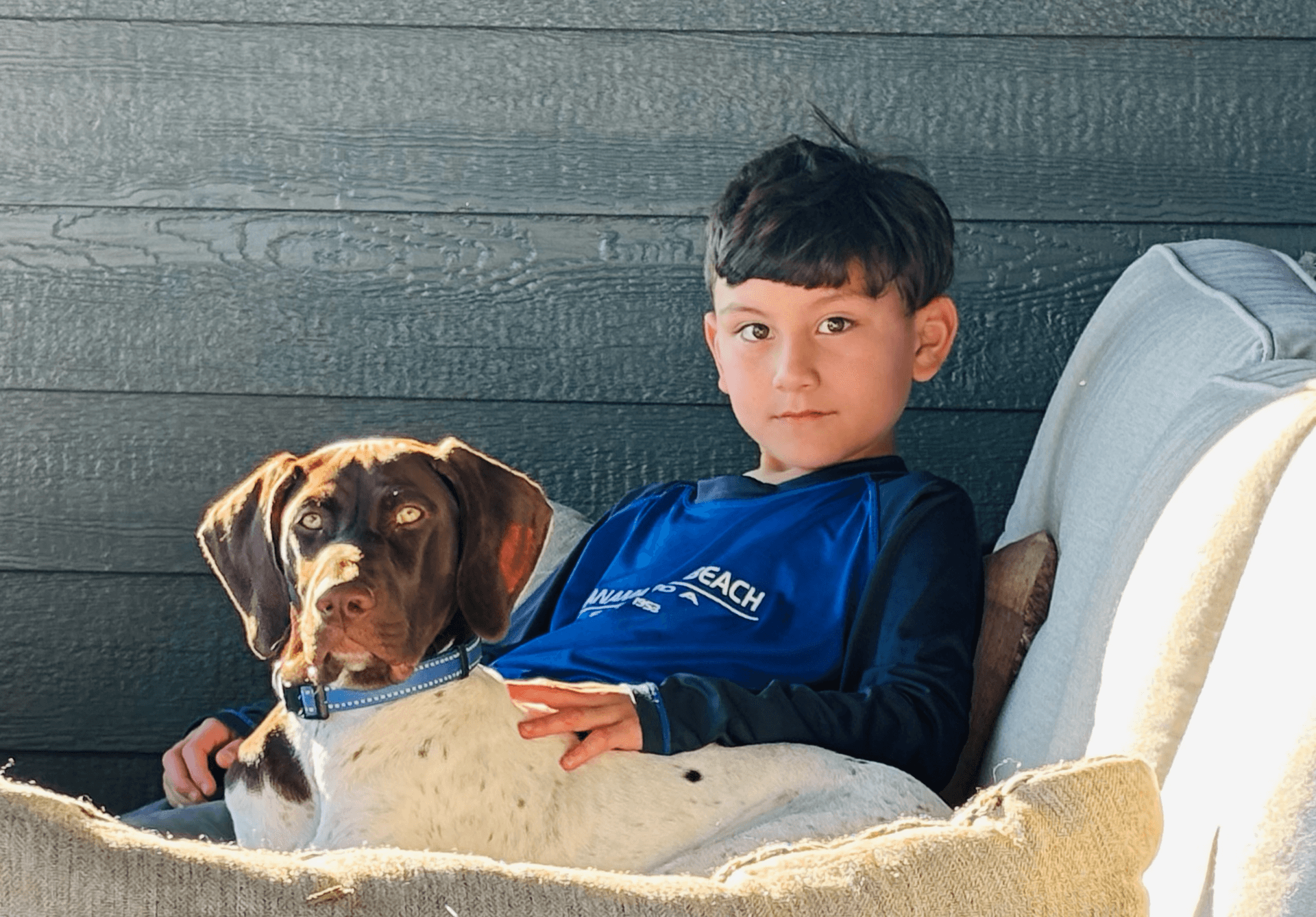
So rather than treating temperament testing as a crystal ball, we believe it is most useful as one additional data point alongside something even more valuable: weeks of observation.
A puppy's response during a few minutes of structured testing can tell us something. Watching that puppy eat, sleep, play, explore, problem-solve, interact with littermates, meet people, encounter new objects and experience everyday life over several weeks tells us something too. Neither should stand alone.
Four Weeks Is a Snapshot, Not a Fortune-Telling Session
This is especially important when families begin choosing puppies. At Tipsy Rabbit, puppy selections are made at approximately four weeks of age. By then, we've spent countless hours with the litter and we're beginning to see individual tendencies emerge. Want to know more about how we use what we know about each puppy—and each family—to help guide those decisions? Read The Art of the Match
But we are very careful about what we promise. A four-week-old puppy is still a baby.
We can tell you what we're observing. We can share patterns we've seen developing. We can consider what we know about the parents, grandparents and previous puppies from our program. And as those puppies continue developing, later observations and tools such as temperament testing can give us even more information about the puppy beginning to emerge.
What we cannot do is look at a young puppy—or even the results of a seven-week temperament test—and predict with absolute certainty exactly what that dog will be like at two, five or ten years old. And we don't believe responsible breeders should pretend otherwise.
You Become Part of the Equation
When your puppy goes home, something important happens: You become part of their development.
The breeder may have chosen the genetics and shaped the first several weeks, but your puppy's world becomes much larger once they leave us. Your home environment matters. Your routine matters. Your expectations matter. Training matters. Continued socialization matters. The amount of physical exercise and mental work your puppy receives matters. Even the behaviors your family unintentionally rewards can influence the adult dog standing beside you several years from now.
This doesn't mean you can completely rewrite genetics. You probably aren't going to turn a naturally high-drive GSP into a dog whose greatest ambition is moving from one end of the sofa to the other.
But you can teach that high-drive dog how to settle. You can give that drive somewhere productive to go. You can build confidence in a thoughtful puppy, teach impulse control to an enthusiastic one and create communication with an independent one.
That is the beautiful part of raising a puppy. You're not simply discovering who they are.
You're helping them become who they're going to be.
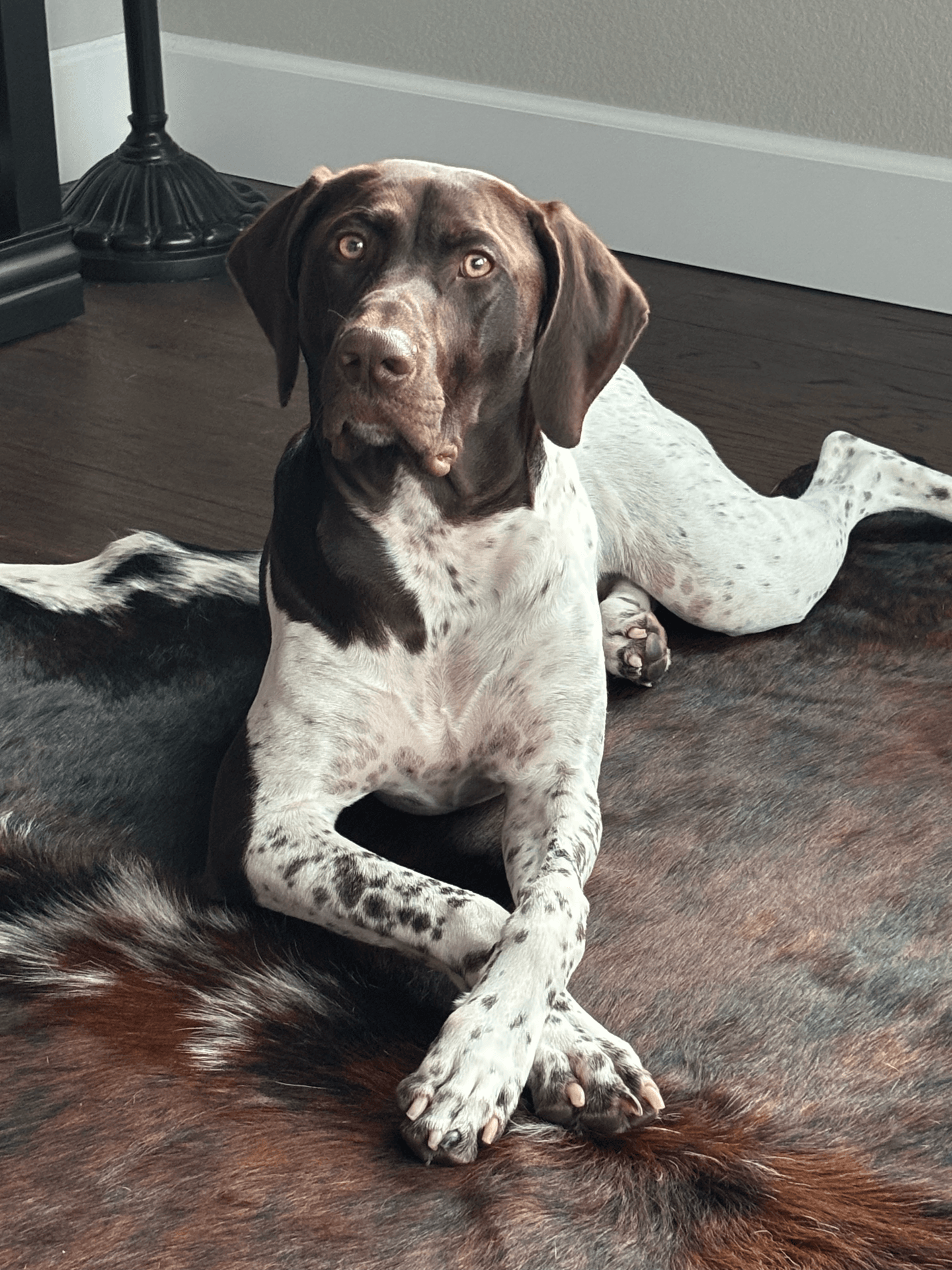
Why Thoughtful Breeding Still Matters
If environment has so much influence, does genetics really matter that much? Absolutely.
Training can shape behavior, but it can't manufacture every underlying trait. That's why responsible breeding matters.
We want to stack the deck in favor of healthy, stable, confident, versatile dogs with the qualities we believe a German Shorthaired Pointer should possess. Then we raise those puppies intentionally. And finally, we place them with families who will continue the work.
It isn't nature versus nurture. It's nature and nurture.
It's generations of thoughtful breeding meeting eight weeks of intentional puppy raising, followed by years of experiences, training, relationships and life with you. And somewhere in that combination, a puppy becomes completely and unmistakably themselves.
At Tipsy Rabbit, we may have the privilege of choosing the pairing and giving our puppies their start. But one of our favorite parts of breeding is watching what happens afterward—seeing pieces of Mom, Dad, grandparents and sometimes generations past peek through, while each puppy grows into a dog entirely their own.
We provide the foundation. You help write the rest of the story.
Tipsy Rabbit Built for the field. Raised for the family.
Cheers to Happy Tails,
❤️ Becky