Why Doesn't Every German Shorthaired Pointer Look the Same?


Tipsy Rabbit Tips & Pointers Blog
Understanding the Difference Between the Show Ring and the Field
If you've spent any time looking at German Shorthaired Pointers, you've probably noticed something interesting.
Some GSPs are heavily built with deep chests, substantial bone, and an unmistakable "show dog" presence. Others are lean, athletic, and look like they could run all day without breaking stride.
So which one is correct?
The answer is...both.
While every AKC German Shorthaired Pointer traces back to the same breed standard, decades of selective breeding have produced dogs that excel in different arenas. Some breeders have focused primarily on success in the conformation ring, while others have continued selecting for real-world hunting performance.
At Tipsy Rabbit, we believe understanding those differences helps families choose a puppy whose structure matches the life they want to live.
The Original German Shorthaired Pointer
The German Shorthaired Pointer wasn't created to specialize in just one task.
Developed in Germany as the ultimate versatile hunting companion, the breed was expected to point upland birds, retrieve ducks from icy water, track wounded game, and remain a cooperative partner from sunrise until sunset.
Everything about the original dog was intended to serve a purpose.
Its structure wasn't designed for beauty alone—it was designed for function.
That functional athlete is still the foundation of today's breed.
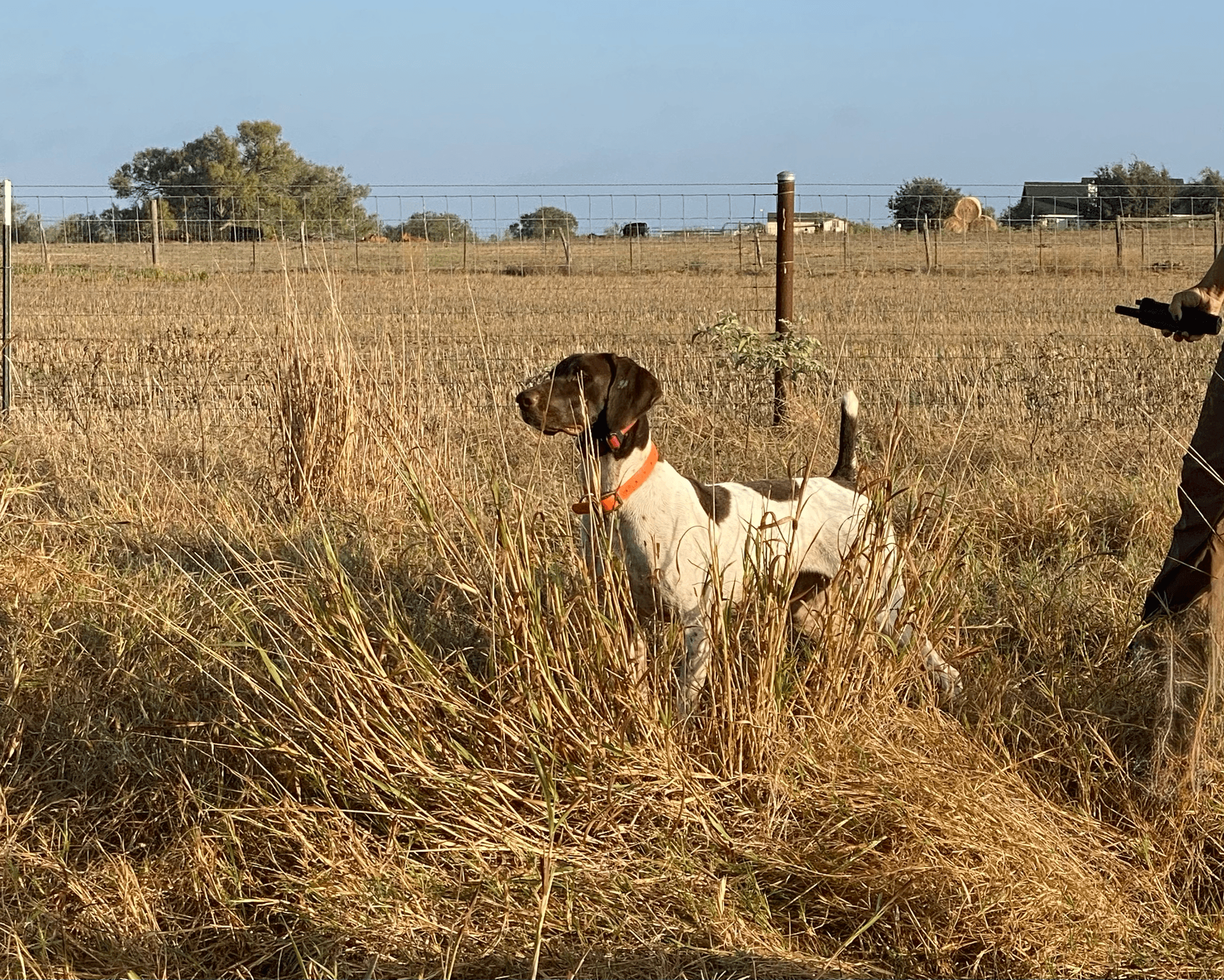
The AKC Conformation Dog
The purpose of conformation is often misunderstood.
Dogs are not judged against one another simply for being "pretty." Instead, judges evaluate how closely each dog conforms to the official AKC breed standard.
Characteristics often rewarded in today's conformation ring include:
More bone and substance
A deeper, broader chest
Strong forequarters
A balanced, compact outline
A fuller head with classic breed expression
Smooth, effortless movement around the ring
The overall impression is one of strength, balance, elegance, and breed type.
Many outstanding conformation dogs are also talented hunters, and many breeders successfully preserve both qualities.
The Real-World Hunting Athlete
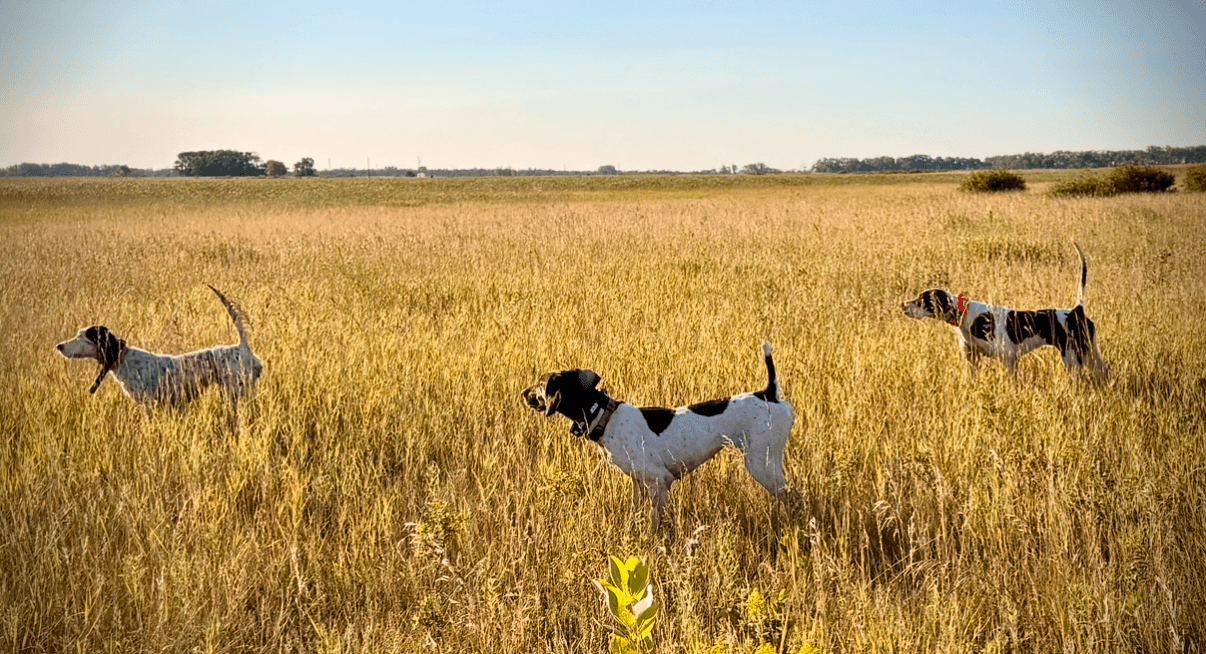
Now picture a dog covering thirty miles across Kansas prairie, Texas quail country, or South Dakota pheasant fields.
That dog is carrying every ounce of body weight over thousands upon thousands of strides.
Efficiency becomes everything.
Working hunting dogs often develop—or are intentionally bred for—a different appearance:
Lean, hard muscle
Lighter bone
Longer, more athletic silhouette
Tighter skin
Less bulk
Incredible cardiovascular endurance
Their bodies are built to:
Hunt all day
Dissipate heat efficiently
Change direction quickly
Cover enormous amounts of ground
Recover rapidly for another day of hunting
Every unnecessary pound requires energy.
Over the course of an all-day hunt, that matters.
Think of Human Athletes
One of the easiest ways to understand the difference is by comparing human athletes.
A conformation GSP is similar to a decathlete—strong, balanced, versatile, and powerful.
A hard-driving hunting GSP resembles an elite marathon runner or cross-country athlete—lean, efficient, and built for endurance.
Neither athlete is "better."
They're simply optimized for different demands.
Has the Breed Changed?
In some ways, yes.
As with many breeds, different communities naturally began emphasizing different priorities.
Conformation breeders focused on preserving breed type, structure, and movement.
Field breeders focused on bird-finding ability, endurance, cooperation, speed, and practical hunting performance.
Neither path is inherently wrong.
The challenge comes when either extreme loses sight of the breed's original purpose as a versatile gun dog.
The AKC Standard Was Never Meant to Create Extremes
One of the greatest misconceptions is that the AKC breed standard encourages heavier dogs.
It doesn't.
In fact, the standard repeatedly describes a medium-sized, athletic, well-balanced dog capable of performing the demanding work for which the breed was developed.
The German Shorthaired Pointer should never appear coarse or cumbersome.
Nor should it appear weedy or fragile.
The ideal lies in functional balance.
Our Philosophy at Tipsy Rabbit
At Tipsy Rabbit, our breeding decisions begin with one simple question:
Can this dog still do the job the breed was created to do?
We admire beautiful structure, but we believe beauty should never come at the expense of purpose.
Our dogs are expected to be athletic enough to hunt, stable enough to live in the home, trainable enough for first-time owners, and versatile enough to spend Saturday chasing coveys and Sunday curled up beside the family.
That philosophy guides every breeding decision we make.
Because we don't measure success by ribbons alone.
We measure success by generations of healthy, capable German Shorthaired Pointers that continue doing what they were originally bred to do.
Built for the field. Raised for the family.
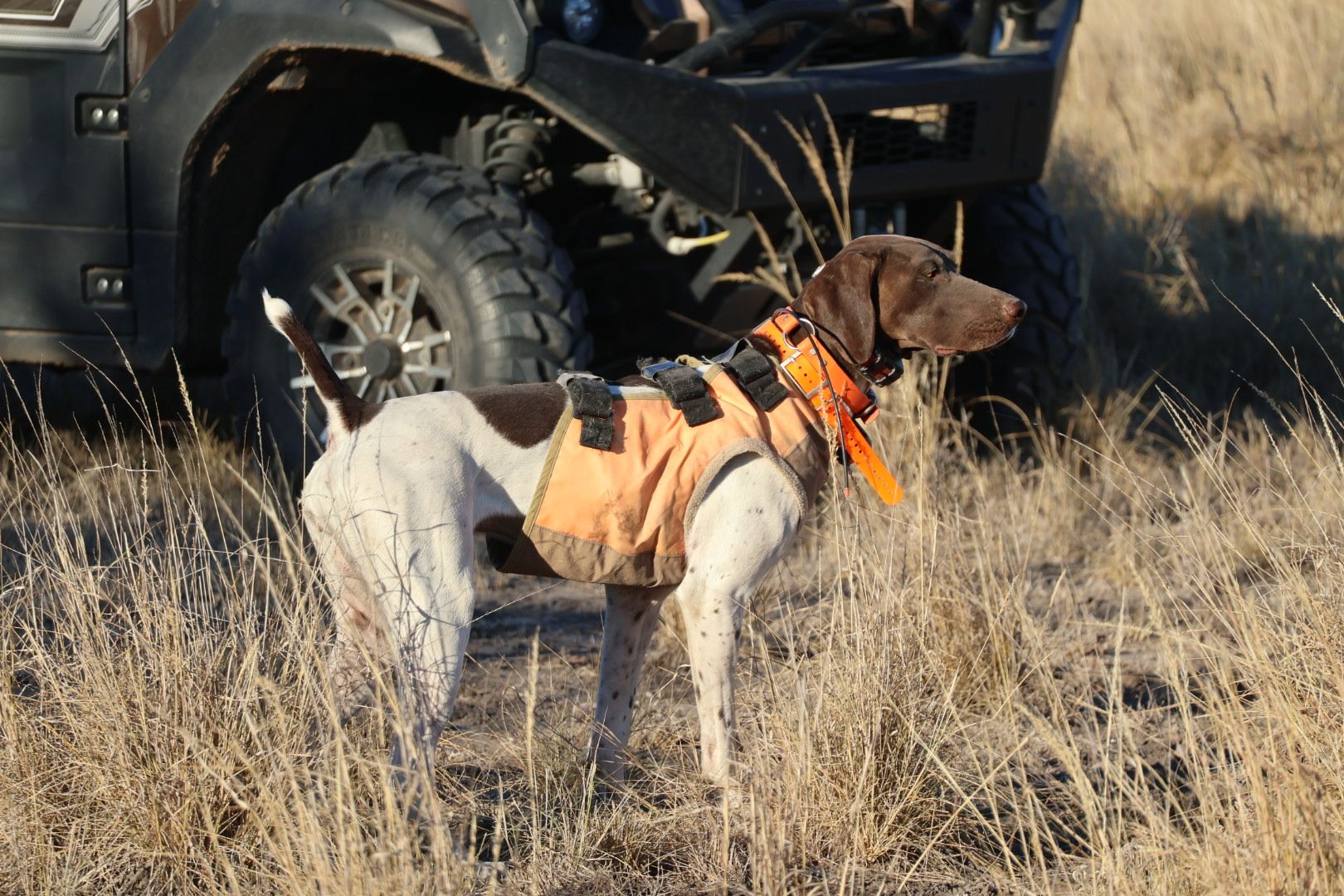
📸 Featured TopDog Alvarado Farm's Juno by Flipping the Bird "Maverick" out of Maverick's Dakota Duchess "Charlie"